
If we’re truthful, when we go into a hospital cubicle, the curtain surrounding the bed is likely the least important thing on our minds. The thing that is of most concern is the patient, their diagnosis and the plan for their treatment. But here is the point: that curtain is performing an awful lot of work behind-the-scenes.
From protecting patient dignity to literally preventing the transmission of infectious bacteria, the often-overlooked medical cubicle curtain is one of the most underappreciated items in any healthcare facility within the UAE. Therefore, for hospital administrators, procurement managers and facility designers throughout Dubai, Abu Dhabi, Sharjah and other cities and countries; selecting the right hospital cubicle curtain is even more important than what people tend to think.
Let us now “pull back the curtain” (and yes, we mean to, pun intended) and review everything you need to know.

- Medical cubicle curtains— the most common industry term
- Hospital privacy curtains— emphasising their core function
- Ward curtains— used in NHS-style and traditional hospital settings
- Medical room curtains— often used for clinic consultation rooms
- Cubicle track curtains— referencing the hanging system
When it comes to medical privacy (also known as cubicle curtains) curtains in healthcare institutions in the United Arab Emirates, these two terms are used almost interchangeably. However, to avoid confusion when sourcing suppliers or writing procurement briefs, using the correct terminology is essential — otherwise, suppliers may provide office partitions when you require hospital-grade products.
The UAE’s healthcare infrastructure has grown remarkably in the past decade. With world-class hospitals in Dubai Healthcare City, major public hospitals under the Department of Health Abu Dhabi (DOH), and an expanding network of private clinics, the demand for premium medical furnishings — including curtains — has never been higher.
Here’s why getting your curtains right is genuinely critical:
1. Patient Privacy & Dignity
This is the obvious one. The Joint Commission International (JCI) — a gold standard for UAE hospital accreditation — explicitly outlines patient rights around privacy. Curtains are a frontline tool in meeting these standards.
2. Infection Control
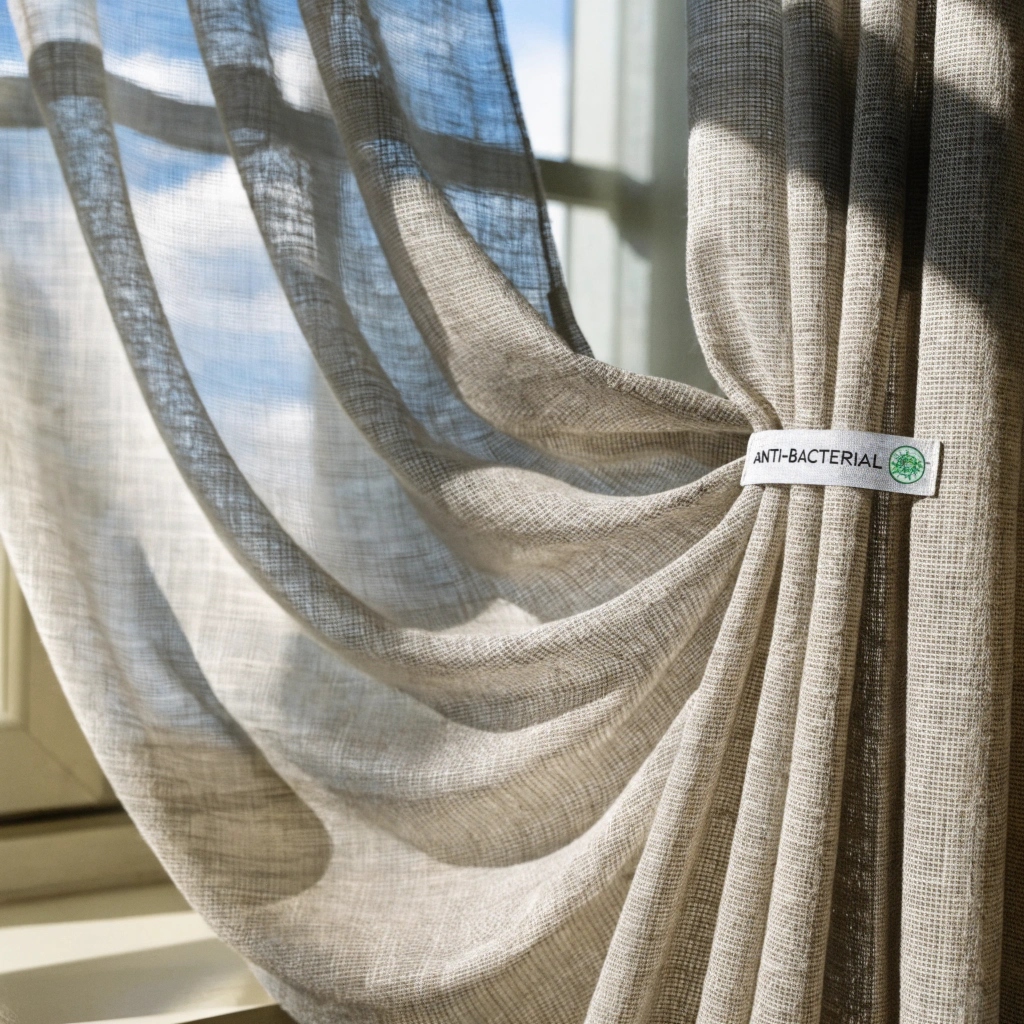
Hospital-acquired infections (HAIs) are a serious concern globally. Traditional fabric curtains can harbour pathogens — studies have shown contamination within hours of being hung. This is exactly why anti-bacterial hospital curtains have become the standard in modern UAE facilities.
3. Fire Safety Compliance
UAE Civil Defence regulations require hospital textiles to meet specific flame-retardant standards. Medical cubicle curtains must comply with EN 1101 or equivalent certifications — not something you can compromise on.
4. Aesthetic & Patient Experience
Believe it or not, curtain design contributes to the overall patient experience. Modern healthcare interior design — particularly in private hospitals in Dubai — uses colour psychology and clean aesthetics to reduce patient anxiety. A shabby, stained curtain does the opposite.
| Feature | Standard Curtains | Anti-Bacterial Hospital Curtains | Disposable Curtains |
|---|---|---|---|
|
Infection Resistance |
Low |
High |
High (single-use) |
|
Durability |
Medium |
High |
Low |
|
Flame Retardant |
Varies |
Yes (standard) |
Yes (standard) |
|
Laundering Required |
Yes (frequent) |
Yes (less frequent) |
No |
|
Cost (Initial) |
Low |
Medium–High |
Low–Medium |
|
Best For |
Low-risk areas |
ICUs, wards, clinics |
Isolation rooms |
Step 1: Choose the Right Track System
The ceiling-mounted cubicle track is the backbone of your setup. In UAE hospitals, the two most common systems are:
- Aluminium straight tracks— ideal for standard bays and wards
- Curved/flexible tracks— better for irregular room layouts or premium private suites
Look for tracks that support easy-glide hooks and can bear the weight of heavier anti-bacterial fabrics.
Step 2: Measure Accurately
Curtain sizing in a medical cubicle is different from home. You need:
- Floor-to-ceiling clearance (typically 12–30cm gap at bottom for ventilation and visibility)
- 150–200% fabric fullness ratio for proper coverage
- Overlap zones at cubicle entrances for complete privacy
Step 3: Use Proper Fixings
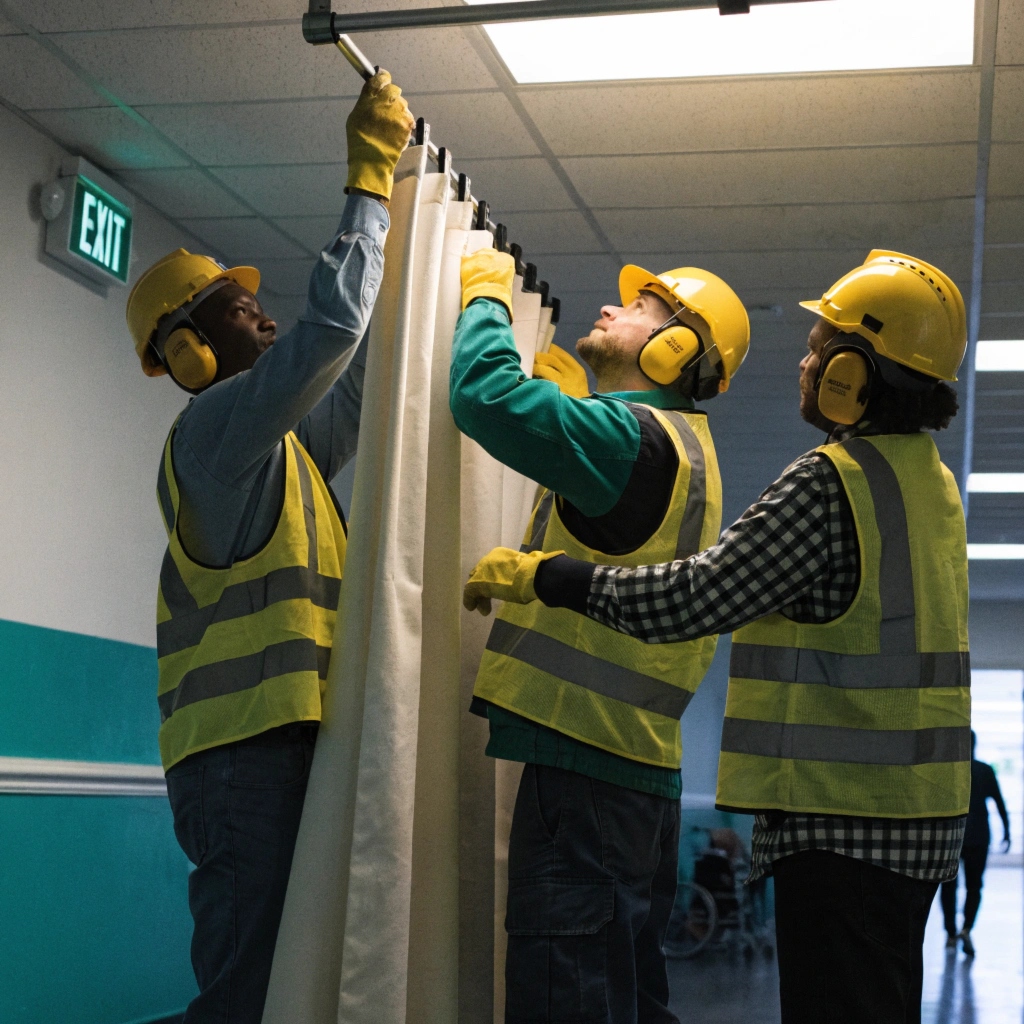
Medical-grade curtain hooks (also called gliders or carriers) must be sturdy enough for frequent opening and closing — a busy ward curtain can be moved hundreds of times a day. Use stainless steel or antimicrobial plastic hooks only.
Step 4: Install with Infection Control in Mind
Curtains should be hung so they don’t touch the floor (a direct contamination risk). Some UAE facilities now use disposable bottom-weighted curtains in high-risk areas for this exact reason.
Step 5: Label and Schedule Maintenance
In line with HAAD (now DOH) and DHA guidelines, curtains should be labelled with installation dates and replaced or laundered on a set schedule — typically every 3–6 months, or immediately after known contamination.
Let me give you a scenario. It’s 2 PM in a busy Dubai private hospital. Bed 14 has just been vacated. Housekeeping cleans the surface but — the curtain? It was last changed six weeks ago. And it’s been touched by dozens of hands since.
That’s the problem that anti-bacterial hospital curtains solve. These aren’t marketing buzzwords — they’re backed by real science:
- Fabrics are treated with silver ion technology or copper-based antimicrobial agents
- Tested to ISO 20743 and AATCC 100 standards for antimicrobial efficacy
- Studies show up to 99.99% reduction in bacterial load compared to untreated fabrics
- Extended use between laundering cycles — reducing operational workload
For UAE hospitals aiming at JCI accreditation or maintaining DHA compliance, these curtains are fast becoming a baseline expectation rather than an upgrade.
Not every healthcare setting is a large hospital ward. Clinics in Dubai’s Jumeirah or Abu Dhabi’s Khalidiyah area have very different needs — and medical room curtains for these settings need to balance:
- Aesthetics— patients in private clinics expect a premium look
- Practicality— easy to remove and replace between patients
- Compliance— still needs to meet fire and hygiene standards
- Cost-efficiency— smaller facilities have tighter budgets
Curtain suppliers in the UAE now offer bespoke options — custom colours, printed designs, and logo branding on clinic curtains. It sounds surprising, but in the competitive Dubai private healthcare market, even the curtains can be a brand touchpoint.
| Healthcare Setting | Recommended Curtain Type | Key Consideration |
|---|---|---|
|
ICU / Critical Care |
Anti-bacterial, disposable zones |
Maximum infection control |
|
General Ward |
Anti-bacterial fabric, launderable |
Durability + hygiene |
|
Outpatient Clinic |
Lightweight medical room curtain |
Aesthetics + easy swap |
|
Private Suite / VIP |
Premium fabric with custom design |
Patient experience |
|
Isolation Room |
Disposable single-use curtain |
Zero cross-contamination |
|
Paediatric Ward |
Colourful, anti-bacterial |
Child-friendly + hygienic |
The UAE has a well-developed medical supplies ecosystem — but quality varies significantly. Here’s what to look for when sourcing:
Local UAE Suppliers
Several established medical equipment suppliers in Dubai and Abu Dhabi stock hospital curtains. Look for companies with DOH/DHA-registered product lines.
International Suppliers with UAE Distribution
Brands like Cube Care, Cubicle Curtains Direct, and Architex International supply to Middle East markets. Many have regional distributors or ship direct to UAE.
Online Procurement — Best Platforms by Use Case
For procurement managers looking for convenience and competitive pricing, the platforms below cover everything from single-room clinic orders to bulk hospital fitouts. We’ve grouped them by use case so you can go straight to what matters for your facility.
Quick Orders, Sampling & Small-Batch Purchases
- Amazon Business — Medical Cubicle Curtains— Huge range, fast delivery, B2B account pricing. Great for trial orders before committing to bulk.
- Amazon — Anti-Bacterial Hospital Curtains— Filter by certification; look for ISO 20743-tested listings.
- Amazon — Cubicle Curtain Track Systems — Ceiling track hardware, hooks, and gliders in one place.
- Amazon — Disposable Hospital Curtains— Ideal for isolation rooms; single-use packs available.
📦 Bulk & Wholesale Orders (UAE & Middle East Delivery)
- Alibaba — Medical Cubicle Curtains (Bulk)— Best for large hospital fitouts. Request CE/fire certification from suppliers before ordering.
- Global Sources — Hospital Privacy Curtains— Verified suppliers with Middle East export experience.
- Made-in-China — Anti-Bacterial Ward Curtains— Competitive pricing; filter for ISO-certified manufacturers.
🏥 Specialist Medical Supply Platforms
- Direct Textile Store — Cubicle Curtains— Healthcare-specific range with flame-retardant and antimicrobial options. Ships internationally.
- Cube Care International— Premium brand widely used in US and Middle East hospitals. Custom sizes available.
- Encompass Group — Medical Textiles— Specialist healthcare textiles supplier; strong infection-control product line.
🇦🇪 UAE & GCC Region Platforms
- Noon Business — Medical Supplies— UAE-based marketplace with fast local delivery. Search ‘hospital curtain’ or ‘cubicle curtain’.
- ae — Hospital Curtains(Amazon Associates) — UAE storefront with local delivery; VAT-compliant invoicing for business accounts.
- Tradeling — Healthcare & Medical Equipment— B2B platform built specifically for the MENA market. Good for verified supplier sourcing.
- Dubizzle Business / Bayut Commercial— Useful for finding local UAE suppliers and comparing quotes from Dubai/Abu Dhabi distributors.
I’ve spoken to enough facility managers in Abu Dhabi and Dubai to know that a few things consistently trip people up when specifying curtains. Avoid these:
- Ignoring lead times— custom curtains for large facilities can take 6–10 weeks. Plan accordingly.
- Skipping fabric sampling— always request physical samples before bulk orders.
- Forgetting spare stock— you’ll need replacement curtains for laundering rotations.
- Overlooking track compatibility— not all curtains fit all track systems. Measure hook spacing.
Choosing aesthetics over compliance — fire retardancy and antimicrobial certification are not optional in UAE healthcare settings.
What are medical curtains called?
Medical curtains go by several names depending on context: medical cubicle curtains, hospital privacy curtains, ward curtains, or medical room curtains. In UAE procurement contexts, ‘cubicle curtains’ or ‘medical privacy curtains’ are the most commonly used terms when sourcing from local and international suppliers.
How do you hang a curtain in a cubicle?
Hanging a curtain in a hospital cubicle involves mounting a ceiling track (straight or curved), measuring the correct drop with appropriate floor clearance, and using antimicrobial curtain hooks or gliders. The curtain should provide full privacy coverage with proper overlap. Always ensure the fabric meets UAE fire safety regulations and is labelled with an installation date for compliance tracking. Full installation steps are outlined in the section above.
How often should hospital curtains be replaced in the UAE?
UAE healthcare guidelines (aligned with DOH and DHA protocols) typically recommend laundering or replacing curtains every 3–6 months under standard conditions, and immediately following any known contamination event or infectious outbreak.
Are anti-bacterial curtains worth the extra cost?
For most UAE healthcare settings — yes, absolutely. The reduction in laundering frequency, improved infection control outcomes, and alignment with JCI/DHA accreditation requirements make anti-bacterial hospital curtains a sound investment. The lifetime cost difference is often less significant than the initial price gap suggests.
Final Thoughts:
Every detail matters with regard to both patient safety and quality of care in any healthcare facility, and although medical cubicle curtains may not be a major news item, they contribute to the greater whole (literally) of creating a safe, compliant, patient-centred environment.
When it comes to outfitting a new hospital in Dubai, updating a clinic in Sharjah, or developing a standard for a multi-site healthcare group in Abu Dhabi regarding curtain procurement, pay attention to getting your curtains right. Basic options should include anti-bacterial attributes and consulting with local fire authorities. Additionally, do not compromise on your installation process.
If you have benefited from this guide in your thought process about these products, please feel free to share it with your team or leave a question on the comments section at the bottom of this page. If you are interested in beginning to explore these products, please use one of the above affiliate links as a good place to start your research for these items.
Affiliate Disclosure: This article contains affiliate links. If you click through and make a purchase, we may earn a small commission at no extra cost to you. We only recommend products we genuinely believe in. Affiliate partnerships include Amazon Associates and similar networks.